Scope: Service Design, Process Design, Product Design, AI Model
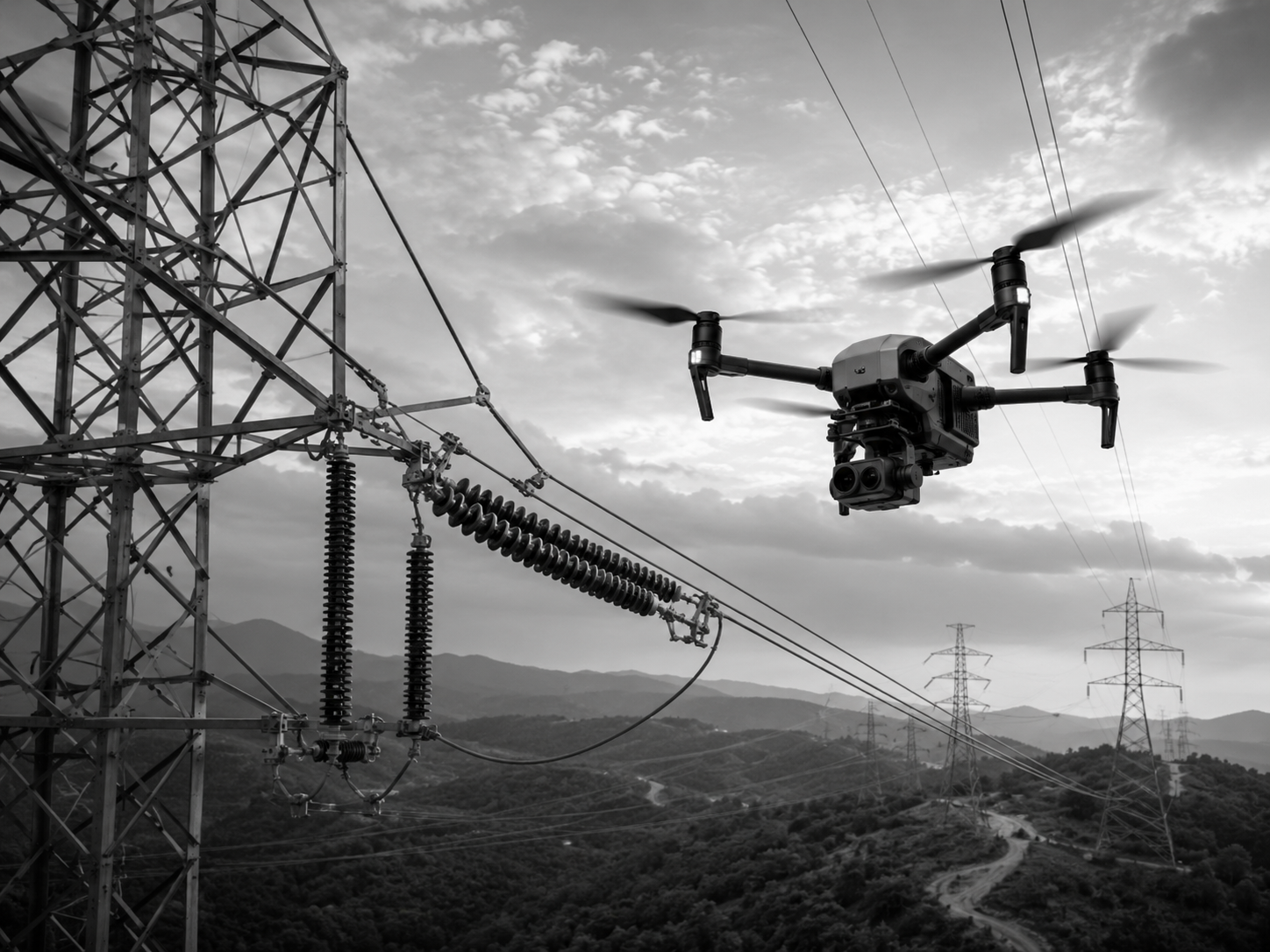
Challenge: Create an end-top-end autonomous drone-based industrial inspection service tailored for the oil and gas, renewables, and utility sectors.
Read the Press Release: Honeywell UAV Service Inspects More Than 100 Miles Of Power Lines In Five Days
Honeywell Aerospace operates in one of the most complex, safety-critical, and regulated environments in the world. Digital products and services must balance usability, compliance, operational efficiency, and risk mitigation—often across legacy systems and deeply entrenched organizational structures.
Key challenges included:
- Fragmented user experiences across internal tools, platforms, and services supporting engineering, operations, and customers
- High cognitive load placed on users working in time-sensitive, high-stakes environments
- Legacy systems and processes that constrained innovation and slowed decision-making
- Misalignment between business objectives, engineering constraints, and user needs
- A growing need to modernize digital experiences without disrupting safety, compliance, or mission-critical workflows
At an enterprise level, the core problem was not “designing better screens,” but creating clarity and alignment across systems, teams, and services—while operating within strict aerospace constraints.
My Role (Scope & Responsibility)
I worked as a senior UX and service design leader, partnering closely with product, engineering, and business stakeholders to bring structure and strategic clarity to complex digital initiatives.
My role included:
- Leading user experience strategy for enterprise-level aerospace tools and services
- Translating business and operational goals into actionable UX and service design direction
- Collaborating cross-functionally with:
- Engineering
- Product management
- Program leadership
- Research and analytics partners
- Driving alignment across teams working on interconnected systems, not isolated products
- Introducing human-centered design thinking into environments traditionally driven by engineering and compliance
- Helping teams navigate ambiguity by framing problems, defining constraints, and prioritizing outcomes
Rather than operating as a downstream designer, I functioned as a strategic partner, shaping how problems were defined before solutions were proposed.
Approach & Strategic Decisions
Given the complexity and constraints of the aerospace domain, the approach prioritized clarity, alignment, and risk-aware decision-making over surface-level optimization.
Strategic Approach
Rather than treating each initiative as an isolated UX problem, I approached the work through a systems and service design lens, focusing on how people, tools, data, and processes interacted across the organization.
Key elements of the approach included:
- Problem framing before solutioning
- Worked with stakeholders to clearly define the actual problem being solved
- Distinguished symptoms (usability pain points) from root causes (process, system, or organizational gaps)
- Contextual understanding of users
- Accounted for users operating in high-pressure, safety-critical environments
- Considered cognitive load, task sequencing, error tolerance, and operational consequences
- Designed with the assumption that mistakes could have serious downstream impact
- Constraint-led design
- Treated regulatory, safety, and legacy constraints as design inputs, not blockers
- Balanced innovation with compliance, reliability, and system stability
- Cross-functional alignment
- Facilitated shared understanding between business, product, and engineering teams
- Helped teams see how individual design decisions affected the broader ecosystem
Key Strategic Decisions
Several decisions shaped the direction and success of the work:
- Prioritized clarity and consistency over novelty to reduce cognitive load and training overhead
- Focused on designing workflows and decision support, not just interfaces
- Advocated for incremental modernization rather than disruptive redesigns in safety-critical contexts
- Established shared UX principles to guide teams working across multiple systems
- Ensured design recommendations were technically feasible, operationally viable, and user-centered
This approach helped teams move forward confidently in an environment where risk aversion and complexity often slow progress.
Outcomes & Impact
While much of the work occurred within enterprise and regulated environments, the impact was tangible across teams, systems, and decision-making processes.
Business & Organizational Impact
- Improved alignment between business objectives, engineering constraints, and user needs
- Enabled teams to make more informed decisions earlier in the product lifecycle
- Reduced ambiguity around requirements by providing clearer experience direction
- Strengthened trust in UX as a strategic discipline, not a downstream function
User & Experience Impact
- Lowered cognitive load for users operating complex tools and workflows
- Improved usability and clarity within mission-critical systems
- Helped teams better account for real-world user contexts and operational pressures
- Supported safer, more reliable interactions in high-stakes environments
Long-Term Value
- Established a foundation for scalable UX and service design practices
- Influenced how teams approached future digital initiatives
- Demonstrated the value of integrating human-centered thinking into regulated, engineering-driven organizations