Scope: Product Design, Employee Process Design, API Design
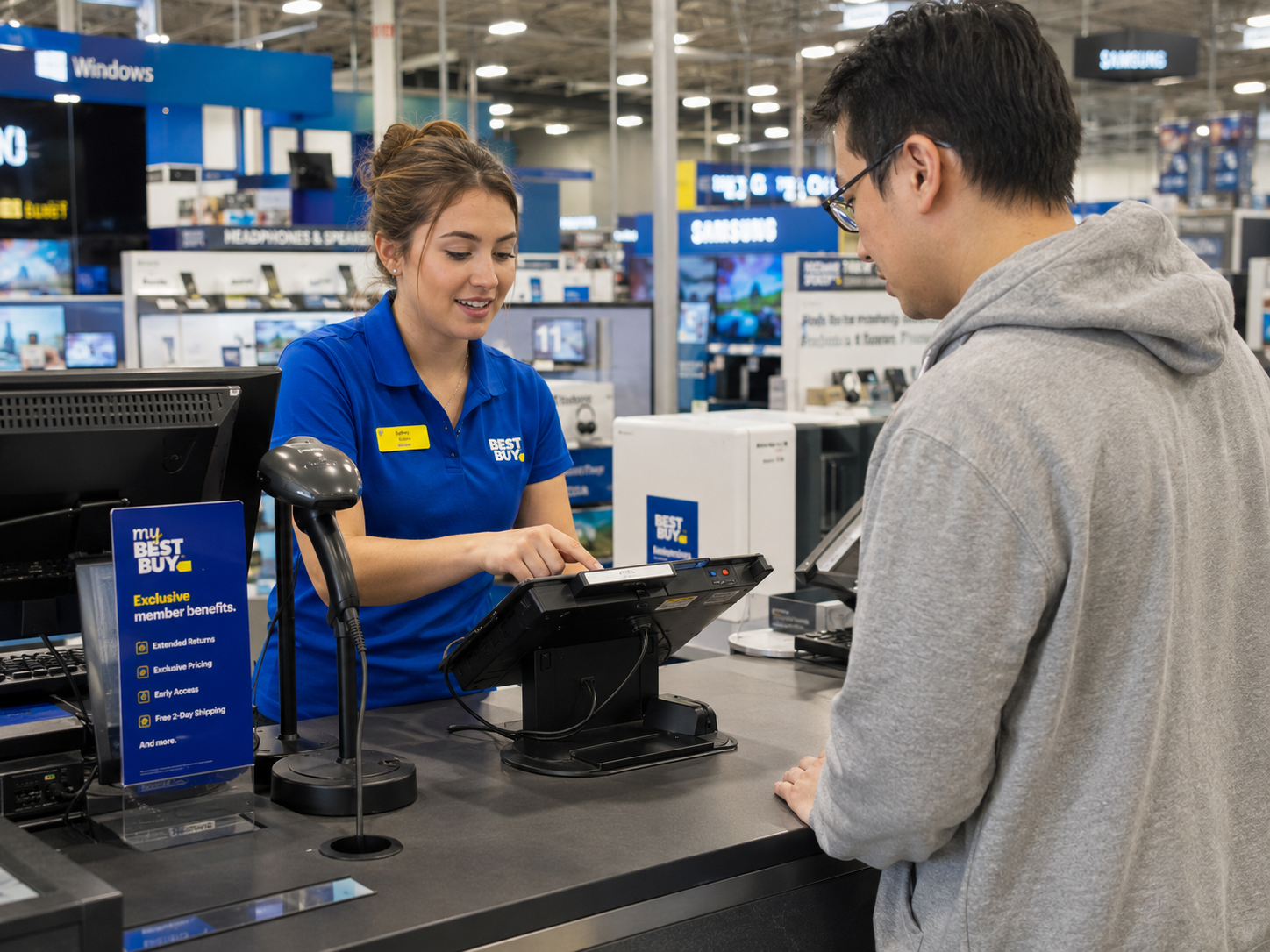
Challenge: Within the Best Buy POS system, create a digital shelf and checkout experience for cable tv, internet, home security and telephone services.
Best Buy is a famously complex omnichannel business, where digital commerce, physical store experiences, support services, and logistics all intertwine. While many solutions focused on individual touchpoints — mobile app, ecommerce site, in-store kiosks — the real challenge was designing a cohesive experience across channels that minimized friction for customers and operational teams alike.
Key strategic issues included:
- Disconnected digital and physical experiences leading to inconsistent customer journeys
- Operational fragmentation between commerce, customer service, and fulfilment systems
- Shifts in customer behavior that demanded rapid adaptation (e.g., buy online, pick up in store)
- Internal processes that prioritized feature delivery over shared experience outcomes
My Role (Scope & Responsibility)
I served as a strategic UX and service design partner, working with multi-disciplinary teams to align business requirements, operational realities, and user needs into a unified experience strategy.
My responsibilities included:
- Defining experience principles to guide cross-channel consistency
- Collaborating with product, design, engineering, and operations leadership
- Mapping end-to-end customer and employee workflows
- Identifying areas of systemic friction and prioritizing intervention points
- Translating business goals into structured UX strategy and service blueprints
This role extended beyond screens into decision support frameworks for distributed teams — the same strategic mindset reflected in your broader work history of bridging human-centered design with business context.
Approach & Strategic Decisions
At Best Buy, the goal was to support transformation from function-centric solutions to experience outcomes that customers and frontline teams could depend on.
Strategic Approach
- Journey-centric thinking over feature delivery: I mapped customer experiences that spanned digital, in-store, and support interactions to uncover systemic barriers to seamless outcomes.
- Service design leadership: Instead of optimizing tools in isolation, I facilitated cross-team workshops to align around shared experience goals and operational realities.
- Operational empathy: Designed with an understanding of the pressures faced by store associates, support agents, and fulfillment leads — integrating their needs into experience decisions.
- Iterative alignment: Leveraged lightweight prototypes and storyboards to align stakeholders before committing to technical execution.
Key Strategic Decisions
- Shifted prioritization from separate channel targets to unified experience outcomes
- Balanced short-term operational fixes with longer-term service design improvements
- Scoped recommendations that delivered value without overwhelming internal process capacity
This approach ensured that the work resonated both with customers and the teams responsible for delivering the experience — an essential factor in enterprise environments.
Outcomes & Impact
Business & Organizational Impact
- Strengthened collaboration across product, engineering, and operations
- Aligned leadership around a common experience framework
- Enabled more strategic planning across channels, reducing duplication
User & Experience Impact
- Reduced friction in key customer journeys (e.g., purchase → fulfillment → support)
- Created experience patterns that were predictable and reliable
- Improved clarity of roles for both customers and employees
Long-Term Value
This engagement helped reinforce UX and service design as strategic capabilities, not just tactical deliverables — seamlessly building on your overarching portfolio narrative around design thinking, leadership, and strategy.